|
|
|
overflowing signed four byte integer
Saturday, May 3 2025
location: 940 feet west of Woodworth Lake, Fulton County, NY
After I'd drunk my morning coffee and eaten my toast, the dogs became restless, so I took them for a walk. It was cloudy but not really raining, and temperatures were rather warm. So I initially headed west on the Lake Edward Trail, but when Charlotte went off-trail at the bottom of the hill that the cabin sits atop, heading north into poorly-explored hemlock groves, I decided to follow her. The terrain throughout the Adirondacks, particularly northwest of the cabin, is a series of random terraces, with each seeming to have their own slowly-draining puddles and swamps. I found an especially long water-filled trench that didn't really seem to have an outlet running along the base of a low cliff at the base of the hill our cabin sits on, and I followed it for awhile before picking my way up the hill and returned to the cabin through a series of low cliffs.
I then turned my attention to my cabin's ESP8266 remote control system. I happened to notice that I was no longer able to send instant commands to my Moxee Hotspot Watchdog (which also monitors indoor weather conditions). In trying to diagnose the problem, I became aware that the watchdog hadn't successfully logged any temperatures in three days, though it was still successfully restarting the Moxee hotspot whenever it needed it. I hooked up my laptop to the watchdog and saw that it was transmitting garbage to the backend in lieu of temperature data. But that was only one of the problems. The other was that it had been up for 28 days and the values for the millis() command (a count of the milliseconds since the device started up) had (tellingly, three days ago) exceeded the limit for four byte signed integers, which was how that data is stored in the MySQL database. The first problem seemed to be the result of data corruption of a string that should've been empty that holds "additional sensor configuration" information that can actually overwrite legitimate sensor values in some cases. Both problems could be solved entirely by tweaks to the backend.
Once I had all those problems solved, I showed myself to be a masochist by returning to the project where I attempt to control one of the minisplit air handlers with a variant of my ESP8266 remote controller code. Last time I tried this, I destroyed one of the USB ports on my laptop, and the time before I destroyed two NodeMCU ESP8266 boards interfacing with Pioneer's malevolent variation on USB. Today I took care to measure multiple times in order to build a more robust interfacing cable to connect an ESP8266 board to an air handler. I also wanted to test the little device that Pioneer designed to plug into their fucked-up USB port to see what signals I could get off that. That device had a little silkscreen label "WBR3" next to it that I looked up and found a pinout for the device telling me what pins were what. The most important of these were the power pins and the serial signals. Using that information, I very carefully redid the interface cable for an ESP8266 board. When I tried it, though, it didn't even power up. And then I realized that, despite all the care I thought I'd taken, I'd somehow reversed five volts and ground! Fortunately, though, you can apparently do that with a D1 ESP8266 board without any ill effects. Despite several attempts, I didn't make any further process getting the variant on my firmware to control the minisplit. But I was able to look at the serial signals from the WBR3 board and see that they were indeed transmitted at 9600 baud. But the actual data was too cryptic to be human readable. I decided to call it quits on working with the minisplit for the rest of the weekend.
By then, Charlotte (though not Neville) wanted another walk. So I grabbed a beer and walked with her down to Woodworth Lake on the Mossy Rock Trail. I sat briefly on the dock and snapped pictures of a single water bird far out in the water. I thought the bird was a loon, though later when I looked at my photos, I could see it was a male mallard duck. All the other ducks I'd seen two weeks ago have vanished, having continued their northward migration. The loon might've been present, but I didn't see him.
Wanting to give Charlotte a more substantial walk, I took her across the Woodworth Lake Outflow Creek and continued downstream some distance east of East Bifurcation Creek. As I did, I could see an unusual amount of daylight coming from Joel's parcel further to the east. I could see from a distance that it was all torn up with lots of woody debris on the ground. Evidently Joel had carried through on his plan to have it logged in order to get some sort of property tax benefit. It's hard to see how this kind of "management" continues to be sold as somehow good for the forest, but I know that Joel, when he talked to Gretchen about his plans to do it nearly two years ago, he'd seemed convinced that a healthy forest requires this sort of thing. The thing is, his trees weren't even all that big, meaning it was still recovering from some earlier round of "management."
I headed back south on the "island" defined by the two bifurcation creeks and Virginia Creek and ultimately climbed the cliffs to the cabin very close to where I'd climbed them on the walk this morning.
Later this evening, I hoped to take a bath. But the water in the tank wasn't anywhere near hot enough.
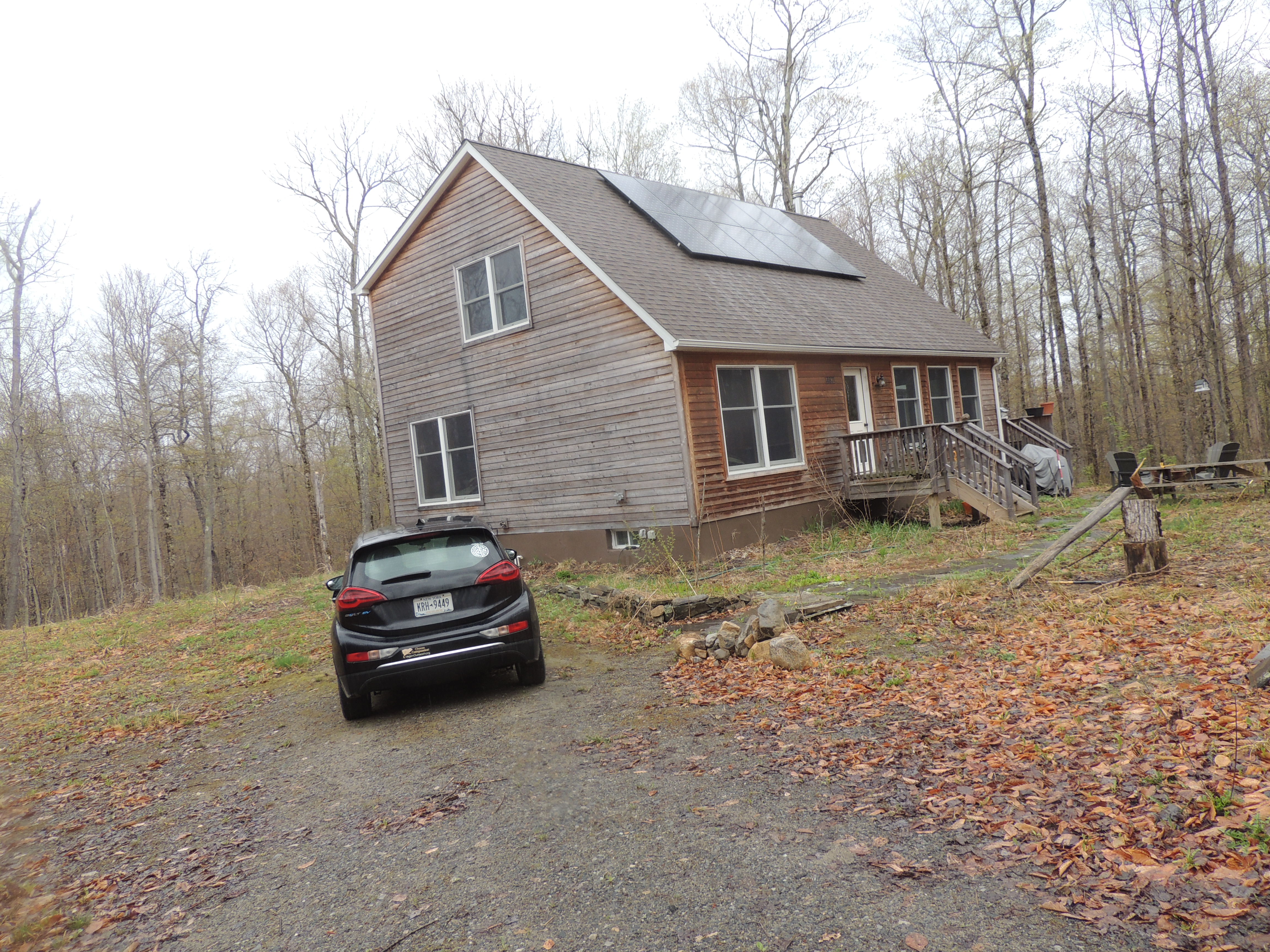
The cabin and grounds this morning. Click to enlarge.
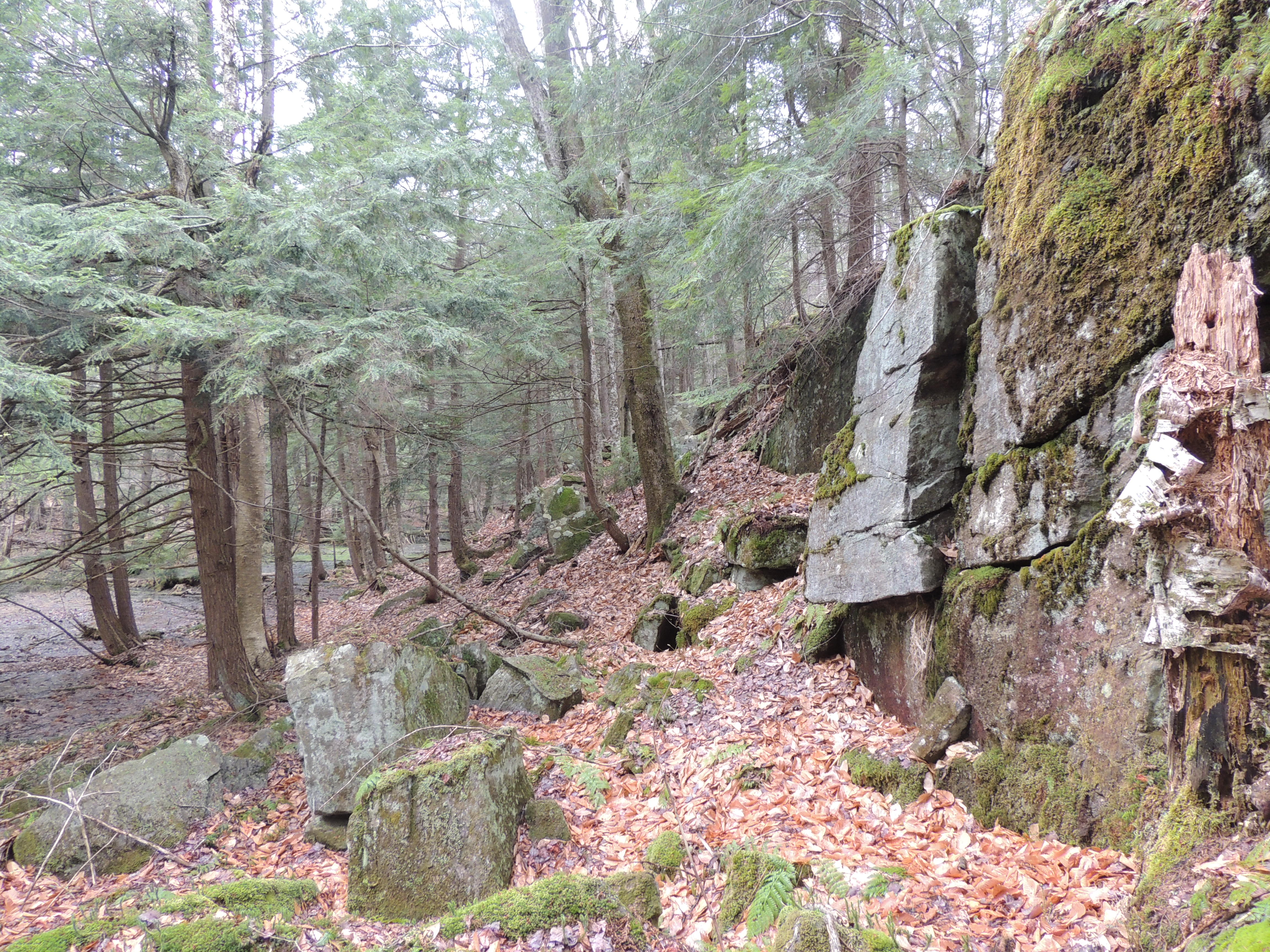
That line of wetlands adjacent to a cliff at the bottom (and just northwest of) the hill that our cabin is near the top of. Click to enlarge.
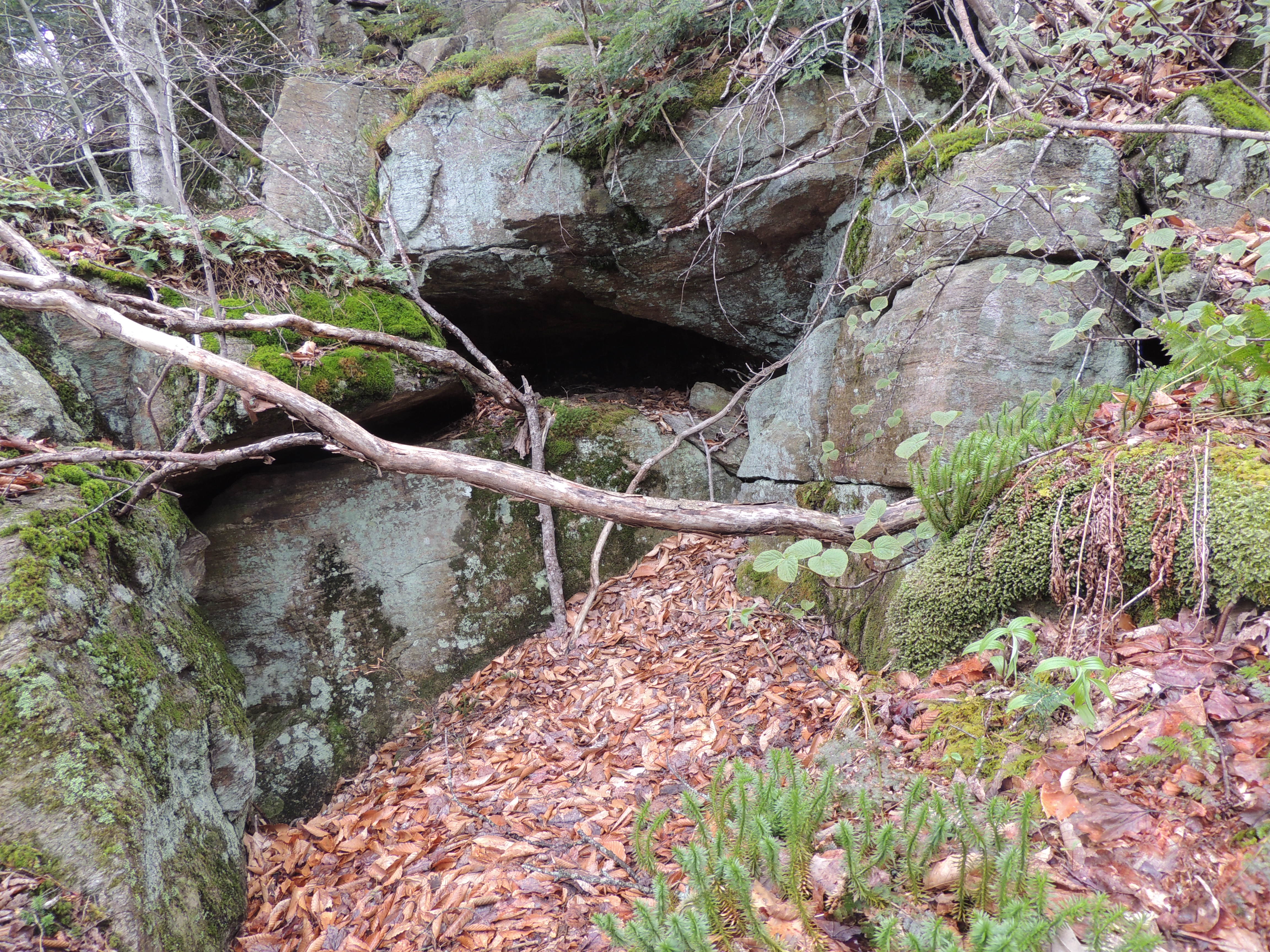
One of my favorite jumble caves northwest of the cabin. Click to enlarge.
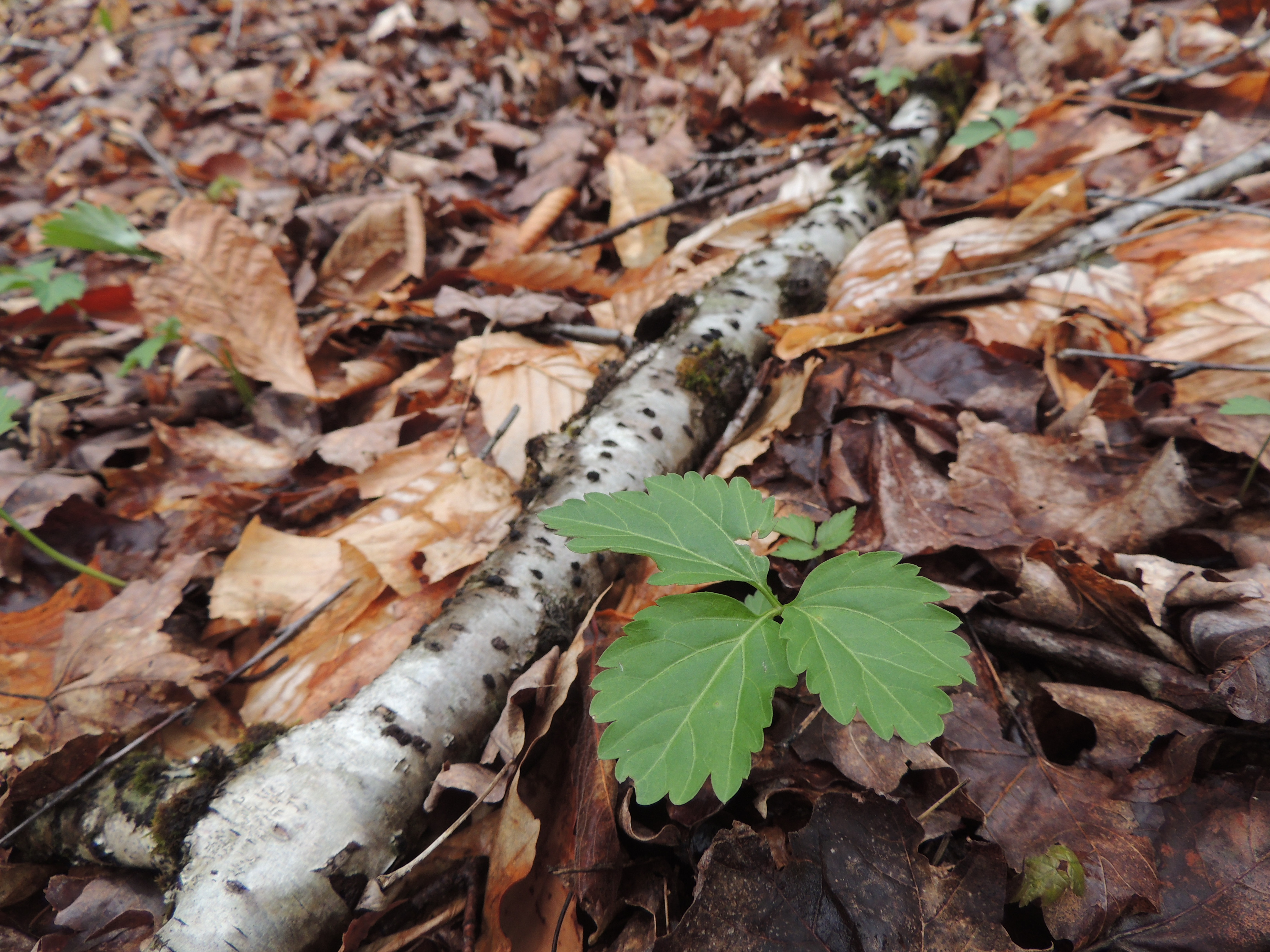
Two-leaved toothwort, a member of the mustard family that vaguely resembles poison ivy. Click to enlarge.
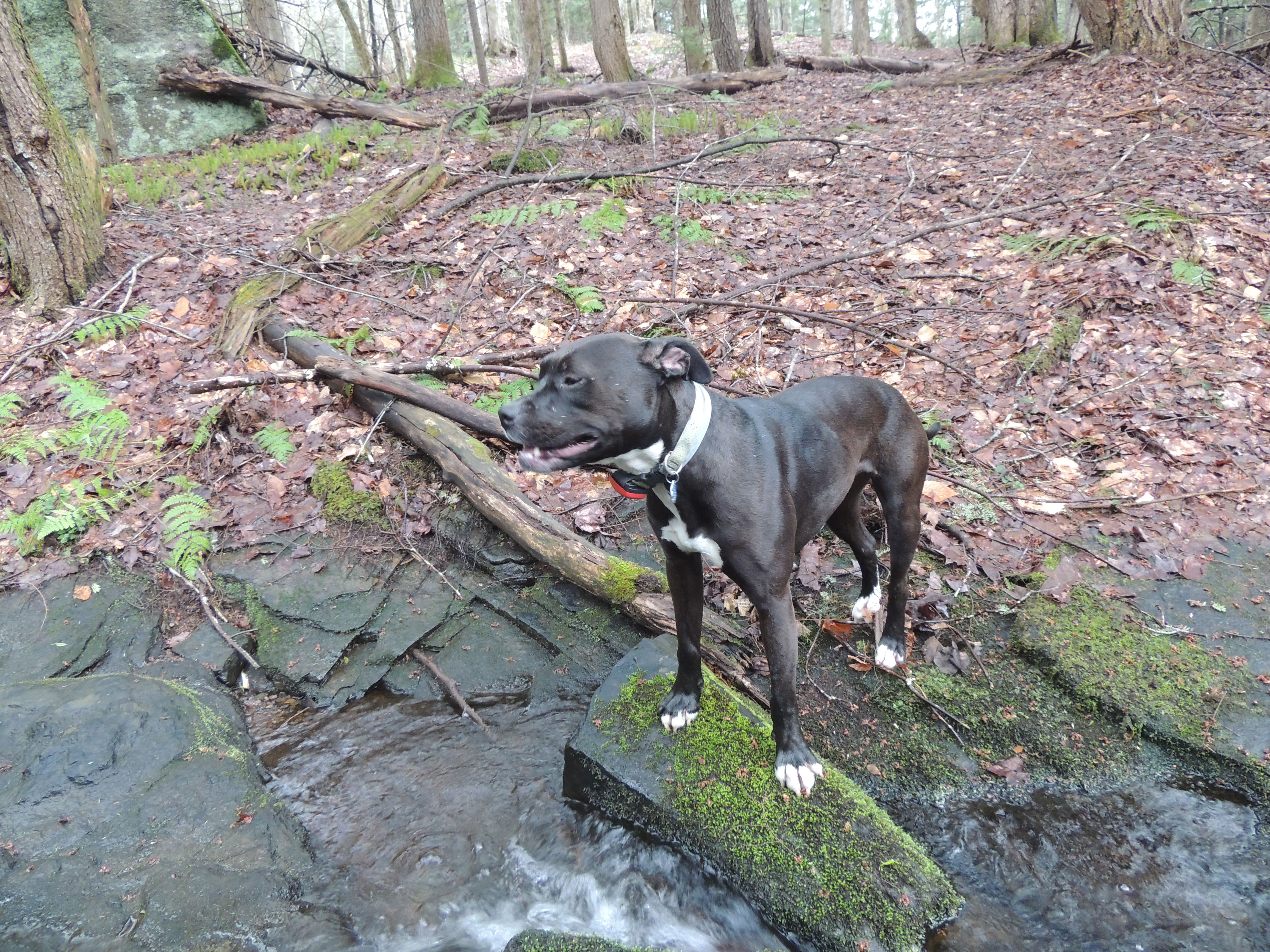
Charlotte on the west bank of East Bifurcation Creek a little below East Bifurcation Falls. Click to enlarge.
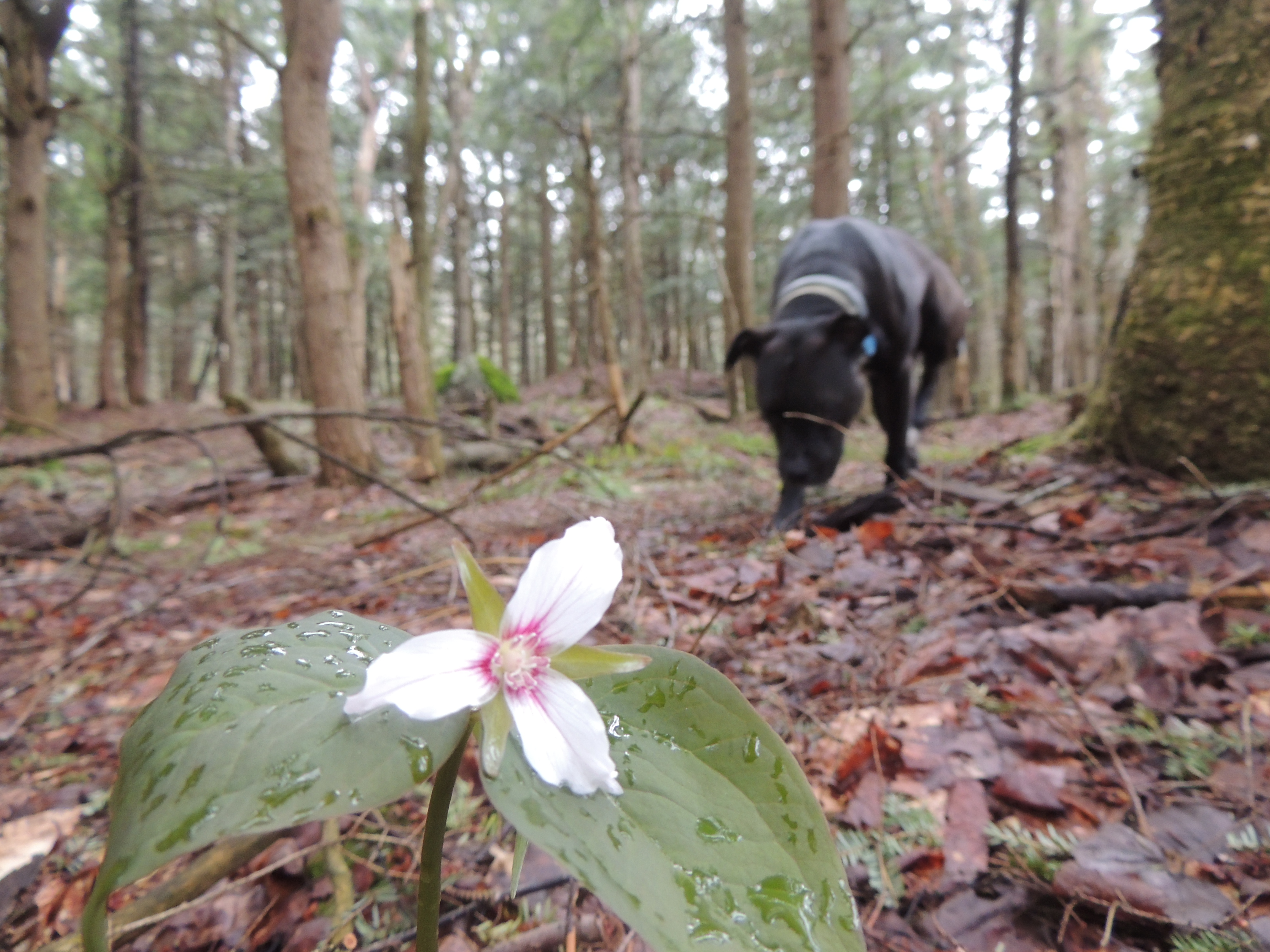
A trillium with Charlotte. Click to enlarge.
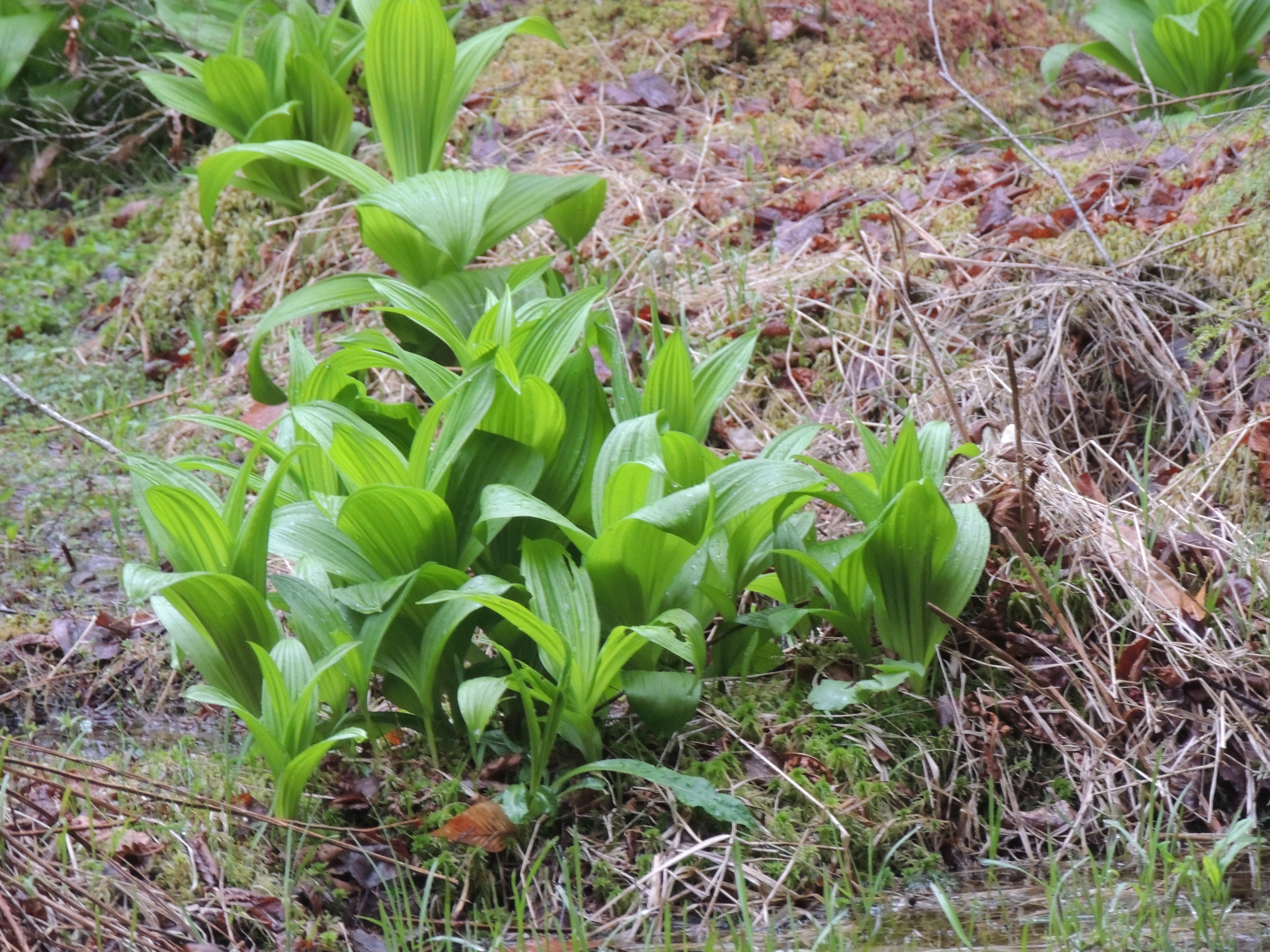
This is, I think, a native false hellebore. These plants are highly-toxic members of the lily order (not family). Click to enlarge.
For linking purposes this article's URL is:
http://asecular.com/blog.php?250503 feedback
previous | next |
