|
|
|
working around yellow jackets
Saturday, August 22 2026
location: 940 feet west of Woodworth Lake, Fulton County, NY
Early this afternoon I grabbed a big beer, barricaded Neville in the cabin, and took Charlotte on a walk down to the lake via the Mossy Rock Trail. This time I remembered to take pictures of my new elfin causeway made of large locally-sourced stones. When I got to the lake, I soon saw a large bird of prey flying eastward along the lake's south shoreline. The bird, which I soon figured out was an osprey, then turned northward and landed in the top of a smallish hemllock directly across the lake eastward from where I was. He or she then proceeded to make a series of high-pitched calls. I took some pictures, but none turned out very good.
I then took the paddleboard out to the south lakeshore and paddled over to that new dock I'd seen off in the distance on Thursday. It's set atop a series of thin metal posts (the kind used for docks) and had no floating parts. Up close, I could see it was made out of nicer lumber than usual and even had posts in place for a railing. Best of all, it had some steps that led down into the water. It had been placed just off the shoreline where the terrain leading down to the lake is very steep. There's a trail there from somewhere, but it comes in a little high above the dock, so another set of wooden steps came down from that trail.
After I paddled counterclockwise (more or less) around the main part of lake mostly from a good distance off-shore, I found Charlotte waiting for me on our dock. When I pulled the paddleboard out of the lake and said it was time to go for a walk, she got very excited and dashed off northward on the path to the outflow creek. I didn't see her again for the rest of the walk. I improved the causeway across the outflow creek and then took the shortcut path back to the old dock path and then back to the cabin.
Back at the cabin, I decided to do some more work on the spiral staircase project. The main challenge initially which everything would depend on was whether or not I could singlehandedly carry that heavy central column pipe up the stairs and safely position it there for going out onto the second floor deck. To make things as easy as possible for myself, I padded both ends of the pole with soft material so that it wouldn't matter much if I accidentally banged something as I carried it. Then, with determination, I lifted it up and carried it into the cabin. (As always, I had trouble swinging the end around through a thick clump of goldenrods as I climbed the steps to the cabin's front door.) But I was able to set its top end fairly high up on the entrance steps. Then I took a nice break before attempting to move it further.
With the second push, I got the pipe up into the second floor loft, positioned perfectly for taking it out onto the deck. It was looking like I was really going to be able to install the spiral staircase all by myself.
But first I had to prepare the deck that the central pole would be attaching to the upstairs deck. I'd done lots of measuring and testing out of arrangements of a landing pad that the steps would be leading to (this would be even with the roof-height deck), placing in relative to a plumb-bob hanging from the roof-height deck. And I'd figured out exactly where the eleven-inch by eleven-inch bottom plate of the central pole would go. Unfortunately, this location was between two joists, meaning all that would be under the base plate if I put it where it needed to go would be a couple five-quarter pieces of larch deck planking. That would be insufficient, and wouldn't provide nearly enough material into which I could send a pair of lag bolts. I had to beef up the structure there, but how? I climbed out on the side of the deck to check out the space between it and a shallowly-sloping rubber roof over the screened-in porch. Could I squeak in there and do carpentry? The space was far too shallow for that. Also, there seemed to be a yellow jacket nest back in there somewhere, as a couple soldiers came out to investigate the unexpected presence of a large hairless ape.
But then on closer examination of the deck, I realized the planks here ran only a fraction of the width of the deck (about six feet) and I could just unscrew the deck screws holding down one such board to access the void from above, and it would be a simple matter to pound a 14.5 inch piece of two by eight down between the joists and then sideways to the center of where the base plate would be. All this went great, though the piece I cut was a pretty tight and took some pounding to get it to where it needed to be. As I was percussively sending it downward with a sledge hammer, I was suddenly surrounded by soldier yellow jackets, three or four of whom stung me before I could get away. One chased me into the upstairs and was in there with me even after I'd closed the sliding glass door out to the deck, and she stung me too. Before she could leave, though, I smashed her with a pillow. (I probably should've let her live, but in this situation I was in a half-panicked "they all need to die" mindset.)
I had no sprayable insecticide, or any insecticide at all, so there was nothing I could do about the yellow jackets without making a trip into town. But even if I had insecticide, I might not be able to get a clear shot at the nest. It could've been anywhere in the inter-joists voids under the upstairs deck, perhaps invisible behind some blocking. Also, it bears mentioning, the yellow jackets weren't really causing that much of a problem and had as much right to be there as I did. But if I wanted to do this project, I was going to have to work around them. So I proceeded to suit up with two layers of pajamas bottoms, a jacket, a hat, and a bug-net over my hat and head. I put on socks and rubber boots and even put on winter gloves. Anything trying to sting me when I was in that outfit that was unlikely to reach any of my flesh. The weather at the time wasn't super hot, but it was too hot to be dressed like that, and soon I was sweating fairly profusely.
Even dressed like that, though, the plan was to work in bursts and disappear before the yellow jackets came out to get me. I would run out onto the deck, pound the piece of blocking a few times, and then retreat. I'd watch the angry soldiers come out to investigate. They'd crawl over the impact driver or tape measure, since those were things that were not normally there, and then decide there was no crisis and go back to whatever else they had to do. Then I'd run out again and do some more banging. After a few sessions of this, not only was the block exactly where it needed to be, but the yellow jackets had become accustomed to the banging and tended to take more time and come out in fewer numbers in response.
I then secured the blocking with four Spax Powerlags blasted in from the side with my impact driver. That makes blasts of high-frequency bangs that travel through the structure, so I only fired in one at a time before leaving to let the yellow jackets calm down enough to send in the next one. With all four in place, the deck was now solid enough to support the bottom plate of the spiral staircase pole.
I replaced the larch plank I'd removed and then measured out the eleven-inch-by-eleven-inch square (with chopped-off corners) where the plate would rest and squirted down a layer of asphalt flashing goop with a layer of asphalt mesh on top of it. This had been the original plan when I'd thought the plate would be resting on pressure-treated lumber, but the larch planks that were used survives the elements without having to be treated with any chemicals, so it was probably unnecessary. But I figured keeping moisture from getting under the plate was also a good idea.
Then I wrangle the heavy, unwieldy pole out onto the upstairs deck, turned it around so the top part cantilevered off the deck without running into the deck above it. I then set up a rope secured on both ends overhead with a loop for about where the pole would be. (If I was going to stand that pole up, I was going to need something to keep it from toppling while I did other things.) It took some strength and a little bit of guts to get the pole vertical, but once it was sitting on its asphalt pad, that square plate was good enough to hold it vertical. I wasn't taking chances, though, so I rigged up the ropes closer to its top from the step ladder.
At some point in all this, I was distracted by my work and apparently did something to set off the yellow jackets again, and was stung yet again.
I drilled holes down through the plate into the new blocking and then ratcheted in two beefy half-inch lag bolts to better secure the bottom of the central pole. Once I did that, it seemed stable enough to undo the rigging and start installing the steps. One of them fought me extra hard on the way down, scratching off some of that paint I'd carefully applied yesterday. But it hardly mattered because that pole would be completely sealed off from the outdoors. To make that possible, I lay down a bead of asphalt roofing compound between the cylinders supporting each step as I set one down atop the next. It was after sunset before I set down the top landing pad and a little square of railig (each with their own hollow cylinder to slide down over the central pole atop everything below). I even put in the curving top rail that set atop a single baluster coming up from the center of each step. But I didn't tighten any of the set screws to lock anything in place just yet. My measurements had all been good and everything was where it needed to be with one exception: the square of railing at the top was too wide and was running into the existing rail system of the roof-height deck unless I swung it out from the central pillar at a weird angle. Was I going to have to cut it narrower or would I figure something else out?
At some point today I found the cause of the weird cycling of some of the ESP8266-controlled devices I'd noticed when I'd arrived back on Thursday. It turned out it was a predictable glitch that happened when the weather forecast part of the algorithm caused a condition to turn on a system while another part of that algorithm caused a condition that turned it off. The conflict would cause it to turn on with one poll and then turn off with the next. I need to figure out a way for the system to become aware that this is happening and put the device into a "safe mode" (probably off) when it detects this.
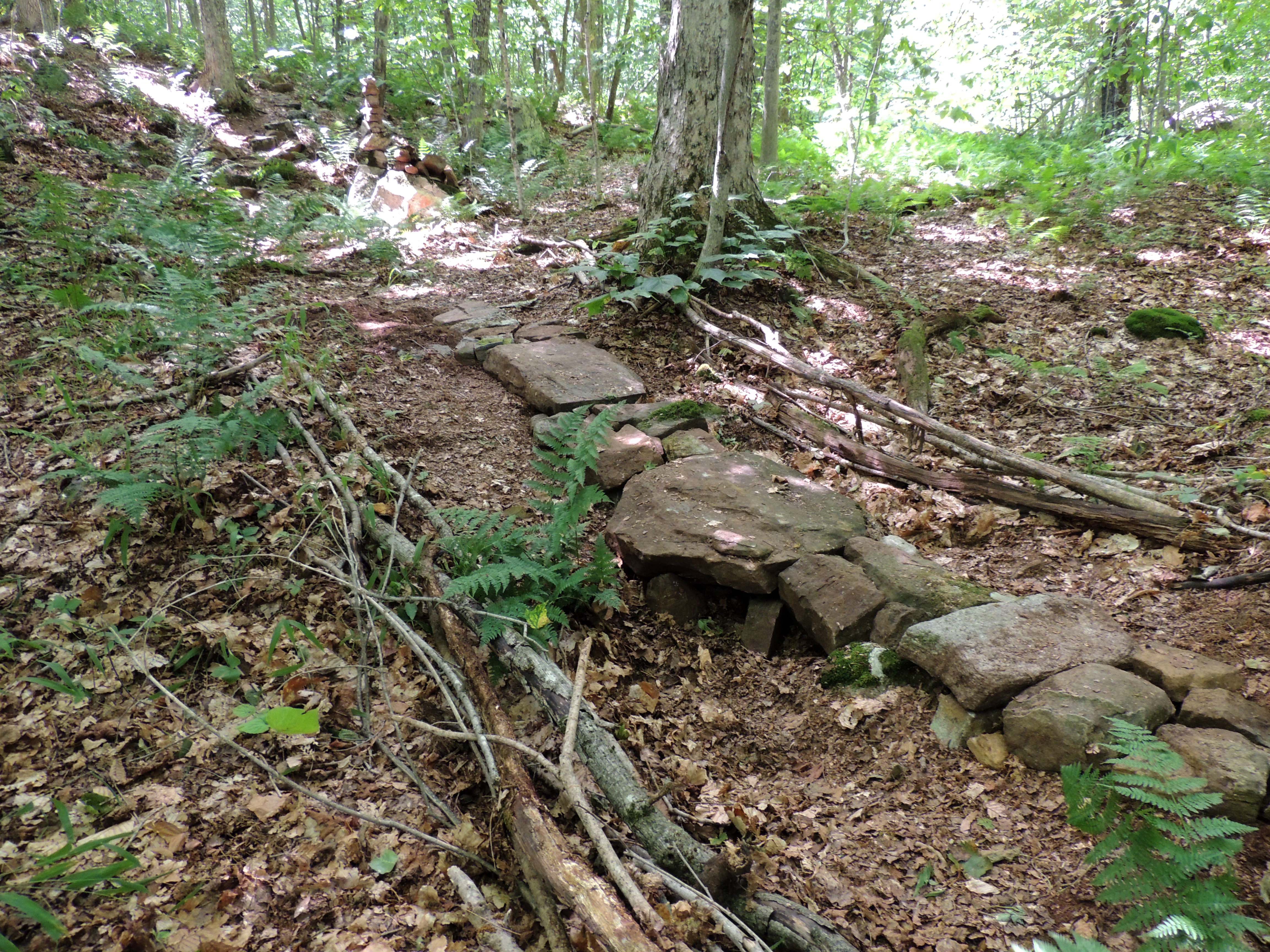
The new "elfin causeway" of large rocks across a low spot in the Mossy Rock Trail, viewed from the southeast. Click to enlarge.
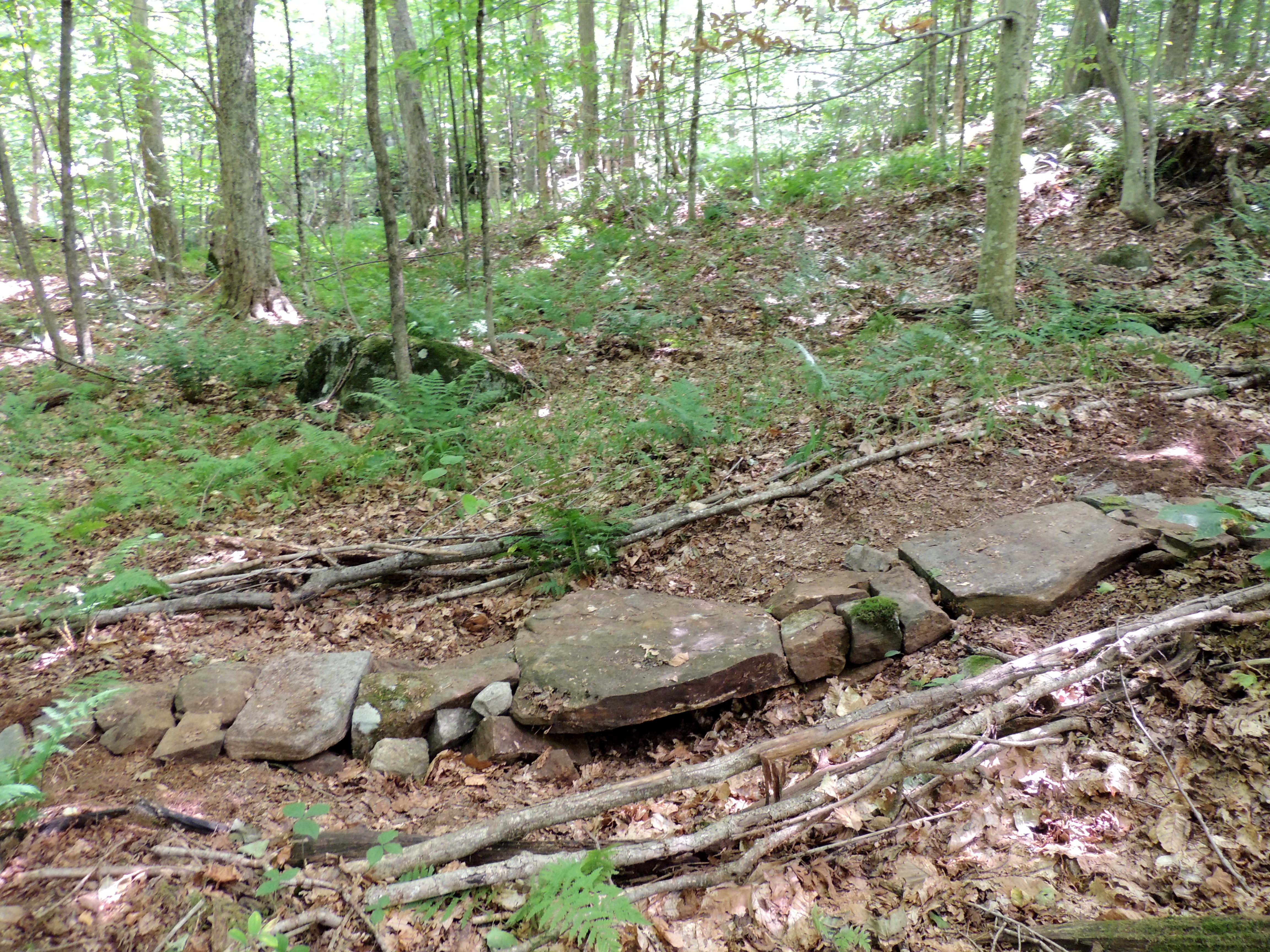
The new "elfin causeway" of large rocks across a low spot in the Mossy Rock Trail, viewed from the north. Click to enlarge.
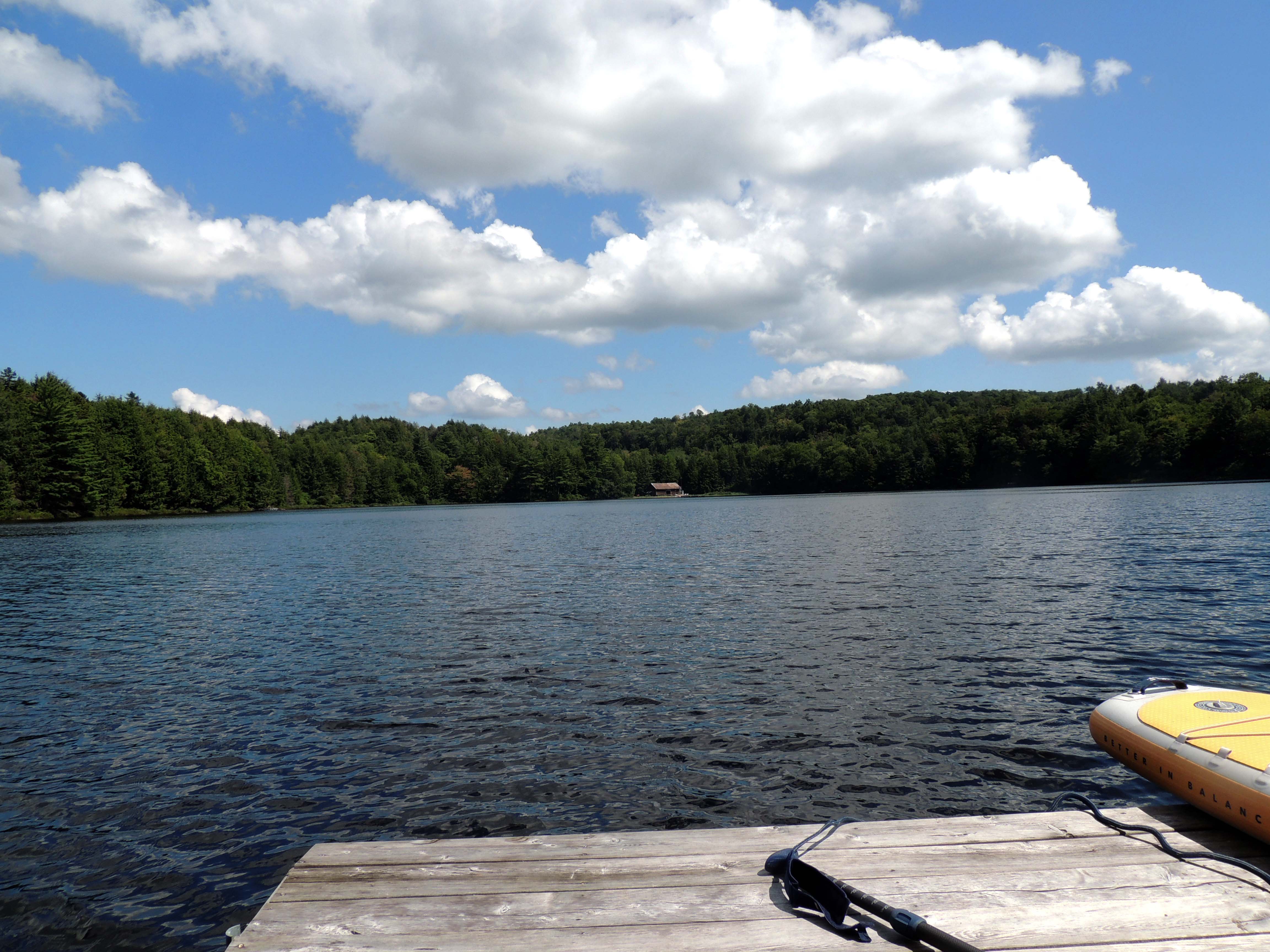
Woodworth Lake today. Click to enlarge.
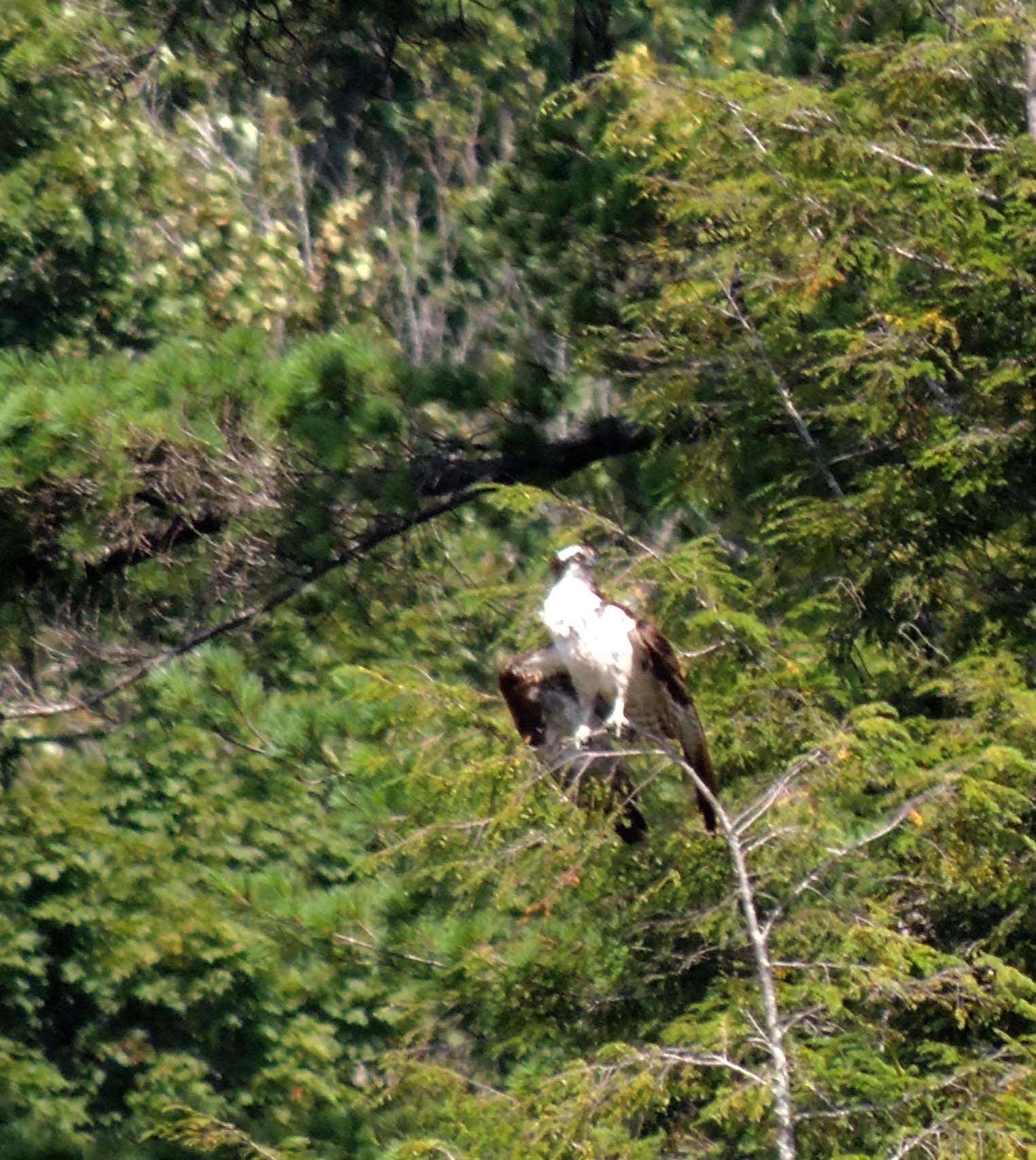
The osprey. Click to enlarge.
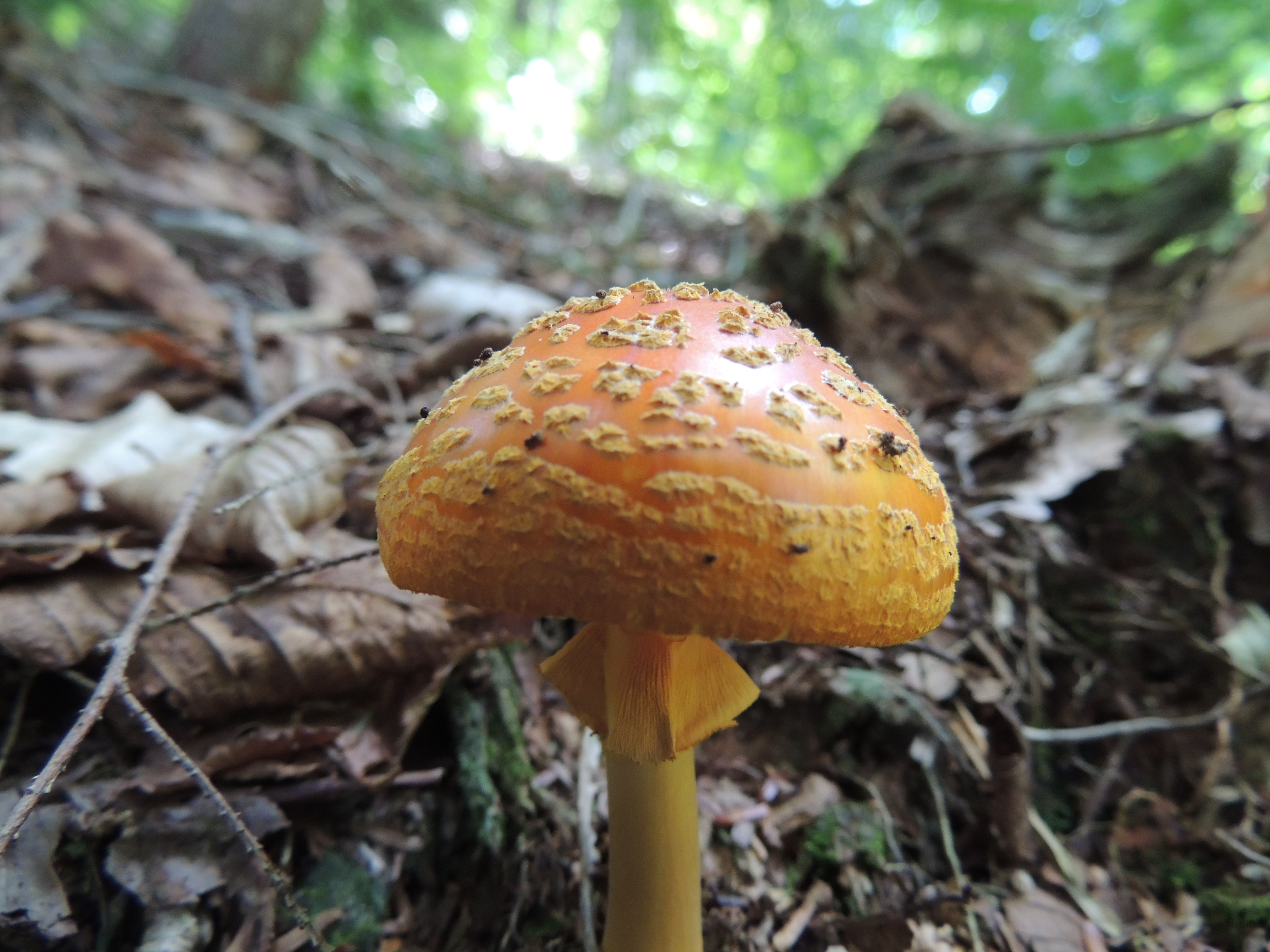
Amanita muscaria. Click to enlarge.
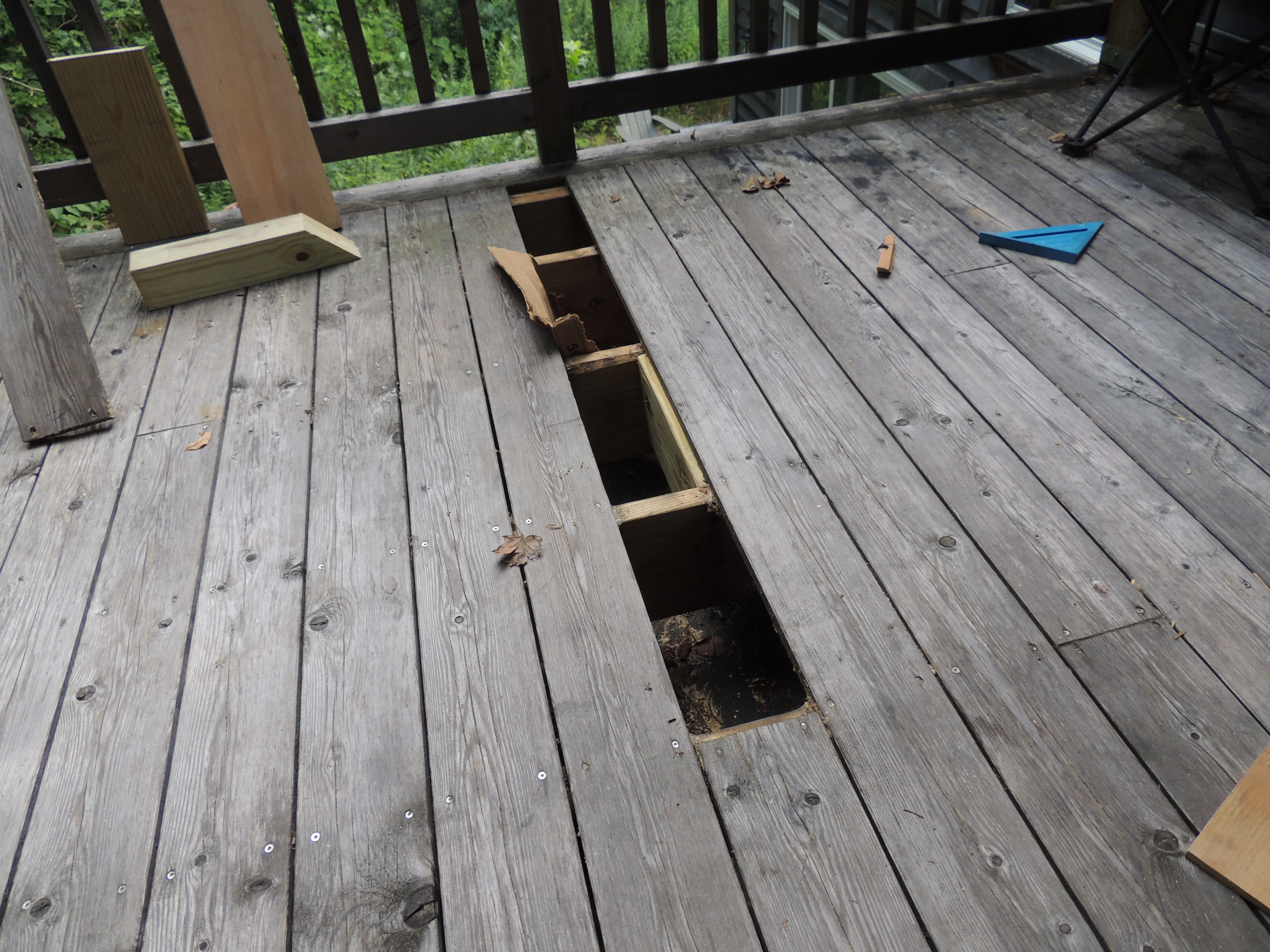
The missing board where I beefed up the upstairs deck (and from which the yellow jackets flew). This is after I'd pounded the blocking to exactly where it needed to be. Note the cardboard placed in one of the voids to keep yellow jackets from coming from that location. Click to enlarge.
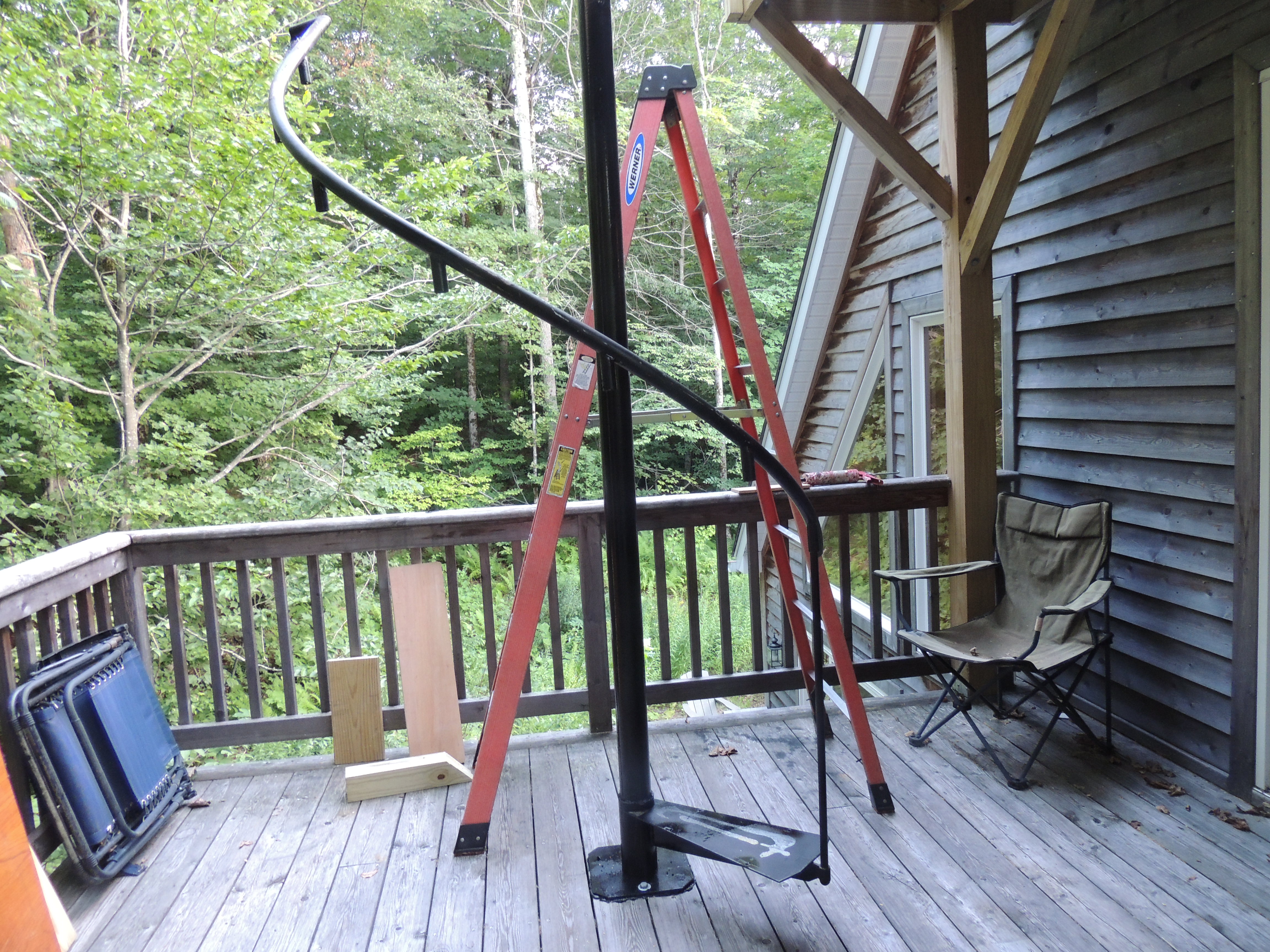
The first step has just been added to the central pole of the spiral staircase. Note the handrail in place just to see how it curves. Click to enlarge.
For linking purposes this article's URL is:
http://asecular.com/blog.php?260822 feedback
previous | next |
